
If you were injured while walking in Uptown Charlotte this summer, your first steps can affect your health, your evidence, and your ability to pursue compensation. Pedestrian accident claims in North Carolina often turn on proof of fault, medical documentation, insurance coverage, and whether the injured person is accused of contributory negligence. ClearView Legal helps injured pedestrians in Charlotte, North Carolina understand how to protect a claim after being hit near crosswalks, parking areas, rideshare pickup zones, intersections, or event traffic. Acting quickly can help preserve photos, witness information, surveillance footage, police reports, and medical records before key details disappear.




Why Summer Walking Accidents Happen in Uptown Charlotte 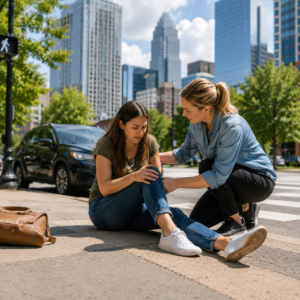
Uptown Charlotte gets busier during the summer. More people walk to restaurants, sporting events, concerts, offices, hotels, parking decks, light rail stops, and rideshare pickup areas. With more foot traffic and vehicle traffic sharing the same streets, a moment of inattention can cause serious harm.
Pedestrian accidents may happen near crosswalks, intersections, loading zones, parking lots, garages, hotel entrances, construction areas, and entertainment districts. A driver may be distracted by a phone, confused by traffic patterns, rushing through a turn, or failing to yield. A pedestrian may be crossing with the signal and still be placed in danger by a driver who does not see them in time.
These claims can become complicated fast. Insurance companies may ask where the pedestrian was walking, whether the signal was active, what color clothing they wore, whether they looked both ways, or whether they stepped out suddenly. Those questions matter because North Carolina follows a strict contributory negligence rule. If the insurance company can argue that the injured pedestrian contributed to the accident, it may try to deny the claim.
That does not mean you should give up. It means the evidence needs to be protected early.
Step 1: Get Medical Care Right Away
Your health comes first. Call 911 if the injury is serious or if you are unsure how badly you are hurt. Pedestrian crashes can cause head injuries, fractures, back and neck injuries, knee trauma, shoulder injuries, internal injuries, and soft tissue damage. Some symptoms may not feel severe at the scene because adrenaline can mask pain.
Medical care also creates a record that connects your injuries to the accident. If you wait several days, the insurance company may argue that your injuries were minor, unrelated, or caused by something else.
After emergency care, follow all treatment instructions. Keep appointments with your primary care doctor, orthopedist, physical therapist, neurologist, or other provider. Save discharge papers, prescriptions, work restrictions, and referrals. These records help show not only what happened, but how the accident affected your daily life.
Attorney Paralegal
Marcel McCrea

Tylisa Crawford
Step 2: Report the Accident and Request the Police Report
If a driver hits you while you are walking, report the crash. A police report may document the location, parties involved, insurance information, witness names, weather conditions, traffic controls, and the officer’s observations. Even when a report does not decide the entire case, it can be an important starting point.
In Uptown Charlotte, details such as intersection layout, pedestrian signals, turn lanes, nearby parking decks, and traffic congestion may matter. If the driver was cited, that may be relevant. If no citation was issued, you may still have a valid claim depending on the facts.
You should request a copy of the crash report when it becomes available. Review it carefully. If there are errors, tell your attorney. Mistakes about location, direction of travel, or witness names can create problems during the insurance process.
For more guidance about injury claims in North Carolina, visit https://clearview.legal/charlotte-personal-injury-attorneys/.
Step 3: Gather Evidence Before It Disappears
Evidence can vanish quickly after a pedestrian accident. Skid marks fade, vehicles are repaired, camera footage is overwritten, and witnesses become harder to reach. If you are physically able, gather what you can at the scene. If you are too injured, ask someone you trust to help.
Helpful evidence may include:
Photos of the intersection, crosswalk, sidewalk, curb, parking lot, or roadway
Photos of traffic signals, signs, lighting, construction zones, or blocked views
Photos of your injuries and damaged personal items
The driver’s name, contact information, license plate, and insurance details
Names and phone numbers of witnesses
The exact time and location of the crash
Nearby businesses, apartments, hotels, garages, or buildings with cameras
Rideshare, delivery, or commercial vehicle information if involved
Uptown Charlotte has many locations where video footage may exist. A business, hotel, apartment building, parking garage, traffic camera, dash camera, bus, or rideshare vehicle may have captured part of the incident. That footage is often not saved forever. A lawyer can send preservation requests to help prevent key evidence from being deleted.
I have worked and referred cases to Attorney Marcel McCrea in Charlotte, North Carolina, for a number of years. His zealous advocacy, keen attention to details, and client care are particularly noteworthy. He has been especially helpful in some complicated personal injury matters that I have referred to his firm. I highly recommend Marcel McCrea and ClearView Legal for anyone looking for excellent attorneys.” - Frantz Jacques ClearView Legal do great work. When I had my car accident they were very diligent in showing me the process. They took care of all the necessary paperwork and negotiation in my personal injury claim. They were both passionate and determined to get me my settlement. I am eternally grateful. Definitely 5 star lawyers in my book." - Osmund Marcellin I was recently injured in a car accident. I hired Attorney Marcel McCrea of ClearView Legal in Charlotte, NC to help me with my personal injury matter and to recover for my medical bills, lost wages, and pain and suffering. - S. Jackson
Before hiring the firm, I tried to negotiate with the insurance company on my own and got no where. Marcel McCrea did an excellent job and helped me to recover much more than I expected. Marcel and his staff exceeded my expectations and provided great customer service. I highly recommend the firm!"
Step 4: Be Careful When Speaking With Insurance Adjusters
After a pedestrian accident, you may hear from the driver’s insurance company quickly. The adjuster may sound friendly and may ask for a recorded statement. You should be cautious.
Insurance companies investigate claims with their own financial interests in mind. An adjuster may ask questions designed to shift blame, limit the value of your injuries, or create inconsistencies. You may be asked whether you saw the vehicle, whether you were distracted, whether you were inside the crosswalk, whether the signal had changed, or whether you feel “fine” now.
Do not guess. Do not minimize symptoms. Do not agree to a recorded statement without legal guidance. You can provide basic information, but you are not required to help the insurance company build a defense against your claim.
If the crash involved a rideshare driver, delivery driver, commercial vehicle, or government vehicle, coverage questions may become even more complex. Different policies may apply depending on what the driver was doing at the time.
Step 5: Understand North Carolina Contributory Negligence
North Carolina’s contributory negligence rule is one of the biggest risks in pedestrian accident claims. Under this rule, if an injured person is found even partly at fault, recovery may be barred in many personal injury cases.
Insurance companies know this. They may argue that a pedestrian:
Crossed outside the crosswalk
Entered the street against the signal
Failed to watch for traffic
Was distracted by a phone
Walked between parked cars
Wore clothing that made them harder to see
Misjudged the speed of an approaching vehicle
These arguments do not always reflect what truly happened. A driver may have been speeding, distracted, impaired, turning without checking the crosswalk, failing to yield, or ignoring traffic conditions. The facts need to be investigated from both sides.
A strong claim may use photos, witness statements, video, vehicle damage, police findings, medical records, and expert analysis to respond to blame-shifting. This is one reason early investigation matters.
For pedestrian-specific legal information, visit https://clearview.legal/charlotte-pedestrian-accident-attorneys/.
Step 6: Track Every Loss Connected to the Accident
A pedestrian accident can affect more than your first medical bill. Many injured people face weeks or months of treatment, missed work, transportation challenges, pain, sleep problems, and reduced independence.
Keep a file with:
Medical bills and explanation of benefits forms
Prescription receipts
Physical therapy records
Mileage to medical appointments
Lost wage documentation
Employer emails about missed work
Photos of visible injuries as they heal
A simple pain and recovery journal
Receipts for mobility aids, braces, or medical supplies
Your claim may include medical expenses, lost income, reduced earning ability, pain and suffering, future treatment needs, and other accident-related losses. The available compensation depends on liability, insurance coverage, injury severity, and the strength of the evidence.
Do not accept a quick settlement before you understand the full scope of your injuries. Once a release is signed, you may lose the ability to ask for more money later, even if symptoms worsen.
Step 7: Watch for Common Uptown Charlotte Claim Issues
Pedestrian accident claims in Uptown Charlotte may involve facts that are not obvious at first. The location and timing can matter.
For example, a summer evening crash near a restaurant district may involve rideshare congestion, double-parked vehicles, distracted drivers, and heavy foot traffic. A daytime accident near an office building may involve delivery trucks, construction detours, or a driver turning through a crosswalk. A weekend event may create traffic patterns that make it harder for pedestrians and drivers to see each other.
A realistic scenario could involve a person walking near an Uptown parking deck after dinner. A driver exits the deck, looks left for vehicle traffic, and turns right without checking the crosswalk. The pedestrian suffers a knee injury and wrist fracture. The driver later claims the pedestrian “came out of nowhere.” Nearby security footage, witness statements, and photos of the exit angle may show the driver had a duty to stop and look before turning.
Small details can change the case.
Step 8: Speak With a Lawyer Before the Claim Gets Harder
You do not need to handle the insurance process alone. A pedestrian accident lawyer can help investigate faults, identify insurance coverage, communicate with adjusters, gather medical evidence, request surveillance footage, calculate damages, and prepare the claim for negotiation or litigation.
Legal help can also reduce the pressure of dealing with paperwork while you are healing. The goal is not to create conflict where none is needed. The goal is to make sure your claim is taken seriously and supported by evidence.
If your injuries happened in or near Charlotte, ClearView Legal offers a free consultation. The firm can review what happened, explain possible next steps, and help you understand whether a claim may be available.
You can also review attorney information at https://clearview.legal/charlotte-attorney-marcel-mccrea/ or contact the firm directly at https://clearview.legal/contact-us/.
What Not to Do After a Summer Pedestrian Accident
Some mistakes can weaken a valid claim. Try to avoid these common problems:
Do not leave the scene without reporting the accident if you are able to stay.
Do not refuse medical care because you feel embarrassed or unsure.
Do not post about the accident, your injuries, or your activities on social media.
Do not give a recorded statement before understanding your rights.
Do not sign a settlement release before knowing your diagnosis and future care needs.
Do not assume the driver’s insurance company will collect all helpful evidence.
Do not wait too long to ask about video footage or witness statements.
These steps are not about exaggerating a claim. They are about protecting the truth.
How Long Do You Have to File a Claim?
North Carolina generally gives injured people a limited time to file a personal injury lawsuit. In many injury cases, the statute of limitations is three years from the date of injury. Deadlines can vary depending on the facts, the parties involved, and whether a government entity may be part of the claim.
Waiting can still hurt your case even if the legal deadline has not passed. Evidence may disappear long before the statute of limitations expires. Prompt action helps preserve the details needed to prove what happened.
For broader personal injury resources, visit https://clearview.legal/client-resources/.
Speak With a Charlotte Pedestrian Accident Attorney
If you were injured while walking in Uptown Charlotte this summer, take your health seriously and protect your claim from the beginning. Get medical care, report the accident, preserve evidence, avoid rushed insurance statements, and speak with a lawyer before accepting any settlement.
ClearView Legal helps injured people in Charlotte and Mecklenburg County understand their rights after pedestrian accidents and other personal injury incidents. Contact ClearView Legal today for a free consultation and a clear discussion about your next steps.
This article is for informational purposes only and is not legal advice. Consult an attorney about your specific situation.

 |
 |