
Dog bite injuries during Charlotte neighborhood walks and at school bus stops can raise immediate questions about medical care, animal control reports, insurance coverage, and legal responsibility. Charlotte and Mecklenburg County generally require dogs to be leashed, fenced, or otherwise properly restrained. North Carolina law may hold an owner responsible when the dog was legally classified as dangerous, the owner knew about dangerous tendencies, a safety rule was violated, or reasonable care was not used.
If you were injured, the location of the attack, the dog’s history, witness accounts, photographs, video, and local restraint rules may affect your claim. Prompt medical treatment and careful evidence preservation can protect your health and your legal options.


Why Dog Bites Happen During Neighborhood Walks and School Bus Stops 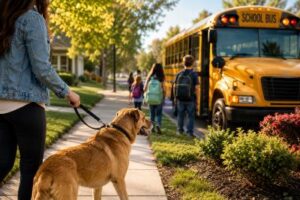
Dog bites during neighborhood walks and school bus stops often happen when a dog slips through an open gate, breaks free from a leash, runs from an unfenced yard, or reaches a public area through an ineffective restraint system. School bus stops can create added risk because children gather near driveways, sidewalks, lawns, parked cars, and neighborhood entrances at predictable times.
A claim does not depend only on whether the attack occurred on the dog owner’s property. A dog bite can happen on a public sidewalk, in a cul-de-sac, near an apartment entrance, beside a community mailbox, or at the edge of a yard. The main questions often include who controlled the dog, whether the dog was properly restrained, what the owner knew, and whether you were lawfully present.
You can learn more about Charlotte dog bite claims at:
https://clearview.legal/charlotte-dog-bite-attorneys/
You can also review information about personal injury claims at:
https://clearview.legal/charlotte-personal-injury-attorneys/
Charlotte Leash Rules and Owner Responsibility
Charlotte leash rules and Mecklenburg County animal-control requirements generally require dogs to remain on a leash, inside a secure fence, or under another approved form of restraint. A dog that runs into a sidewalk, street, bus stop area, or neighboring property may provide evidence that the owner failed to follow a local safety requirement.
A leash violation does not automatically decide every civil claim. It can still be significant evidence. An attorney may review the applicable ordinance, the location of the attack, prior complaints, property conditions, the condition of a gate or fence, witness statements, and anything the owner said after the incident.
North Carolina dog bite cases may involve one or more legal theories, including:
- Strict liability involving a dog that meets the legal definition of a dangerous dog
• Common-law liability based on the owner’s knowledge of dangerous tendencies
• Negligence, such as failing to secure a gate or control a dog near children
• Violation of a local leash or animal-control rule
• Limited liability involving another person who possessed or controlled the dog
North Carolina law defines certain dogs as dangerous based on a severe unprovoked injury or an official determination that the dog is potentially dangerous. An owner of a legally dangerous dog may face strict civil liability for injuries or property damage caused by that dog. Other claims may depend on negligence, prior knowledge, or both.
A landlord or property manager is not automatically responsible because a dog lived on rented property. Liability may exist only in limited, fact-specific circumstances involving possession or control of the area, knowledge of the danger, and a legal duty to act.
Attorney Paralegal
Marcel McCrea

Tylisa Crawford
What If the Dog Had Never Bitten Anyone Before?
A first reported bite does not automatically prevent you from bringing a claim. Prior dangerous behavior may include lunging, snapping, chasing pedestrians, escaping repeatedly, acting aggressively near children, or requiring special handling.
Neighbors, delivery drivers, school bus drivers, and other parents may know about earlier incidents. Animal control records, neighborhood messages, doorbell-camera footage, repair records for a gate or fence, and prior warnings may help show what the owner knew or should have known.
The absence of a prior bite may make some legal theories harder to prove, but it does not end the investigation. Your claim may focus on careless restraint, an unsecured gate, a leash that was too long for the setting, or an owner who allowed an agitated dog to approach children.
A first reported bite does not automatically eliminate a claim. Restraint failures and earlier aggressive behavior may still matter.
I have worked and referred cases to Attorney Marcel McCrea in Charlotte, North Carolina, for a number of years. His zealous advocacy, keen attention to details, and client care are particularly noteworthy. He has been especially helpful in some complicated personal injury matters that I have referred to his firm. I highly recommend Marcel McCrea and ClearView Legal for anyone looking for excellent attorneys.” - Frantz Jacques ClearView Legal do great work. When I had my car accident they were very diligent in showing me the process. They took care of all the necessary paperwork and negotiation in my personal injury claim. They were both passionate and determined to get me my settlement. I am eternally grateful. Definitely 5 star lawyers in my book." - Osmund Marcellin I was recently injured in a car accident. I hired Attorney Marcel McCrea of ClearView Legal in Charlotte, NC to help me with my personal injury matter and to recover for my medical bills, lost wages, and pain and suffering. - S. Jackson
Before hiring the firm, I tried to negotiate with the insurance company on my own and got no where. Marcel McCrea did an excellent job and helped me to recover much more than I expected. Marcel and his staff exceeded my expectations and provided great customer service. I highly recommend the firm!"
Special Concerns When a Child Is Bitten at a School Bus Stop
A child bitten at a school bus stop may suffer facial injuries, hand injuries, puncture wounds, infections, nerve damage, scarring, and emotional distress. A child who is knocked down while escaping may also suffer a head, wrist, knee, shoulder, or back injury.
School bus stop cases require careful fact gathering because several people may have seen different parts of the event. A parent may have seen the dog leave a yard. A bus driver may have seen the child fall. A nearby camera may show whether the dog was loose before the attack.
An insurer may claim that the child approached, touched, startled, or teased the dog. That allegation should be investigated rather than accepted without evidence. North Carolina follows a contributory negligence rule, but the law does not automatically judge every child by the same standard used for an adult. A child’s age, capacity, experience, understanding, conduct, and the surrounding facts may affect the analysis.
Avoid repeatedly questioning a frightened child or suggesting answers. Write down the child’s words as accurately as possible. Preserve clothing, photographs, school records, and contact information for everyone who was present. Tell medical providers about physical symptoms and behavioral changes, including nightmares, fear of dogs, school avoidance, anxiety, or fear while waiting for transportation.
Steps to Take After a Charlotte Dog Bite
Your safety and medical care come first. After the immediate danger has passed, these steps may help protect your health and preserve evidence:
- Call 911 for a serious attack, uncontrolled bleeding, or an immediate public-safety threat.
• Wash the wound with soap and water, then seek prompt medical evaluation.
• Identify the dog, the owner, and the address where the dog is kept.
• Report the incident to Charlotte-Mecklenburg Animal Care & Control.
• Photograph your wounds, torn clothing, the scene, gates, fences, leashes, and property conditions.
• Obtain names and contact information for witnesses.
• Ask nearby residents or businesses to preserve camera footage before it is overwritten.
• Keep medical bills, prescription records, school absence records, and wage-loss documents.
• Avoid posting photographs, accusations, or arguments about the incident on social media.
• Avoid giving a recorded insurance statement before you understand how it may affect your claim.
North Carolina law generally requires a dog that bites a person to be confined for a 10-day observation period at a location designated by the local health director. Reporting the incident helps public-health officials address possible rabies exposure and creates a record of the event.
When a Dog Attack Causes Injuries Without a Bite
A puncture wound is not always required for an injury claim. You may be injured when a charging dog causes you to fall, crash, or move suddenly to protect a child.
Examples include:
- A cyclist crashes while avoiding a loose dog.
• A parent falls while lifting a child away from an animal.
• A pedestrian suffers a broken wrist after being knocked down.
• A child runs into the street while escaping a charging dog.
• A person suffers a knee or ankle injury while retreating from an aggressive animal.
You still need evidence connecting the owner’s conduct and the dog’s behavior to the injury. Photographs, witness statements, video, prior escape reports, animal control records, and medical documentation may help establish that connection.
Related information for injured pedestrians is available at:
https://clearview.legal/charlotte-pedestrian-accident-attorneys/
What Compensation May Be Available?
The value of a Charlotte dog bite claim depends on the injury, available insurance coverage, liability evidence, and the effect on your daily life. Recoverable damages may include:
- Emergency care, surgery, medication, and follow-up treatment
• Plastic surgery or scar-revision treatment
• Counseling for anxiety, trauma, or fear
• Lost wages and reduced earning capacity
• Pain, physical limitations, and emotional distress
• Permanent scarring or disfigurement
• Future medical and psychological care
• Damage to clothing, glasses, a bicycle, or other personal property
Homeowners insurance or renters insurance may cover a dog bite even when the incident occurred away from the insured residence. Coverage depends on the policy. Exclusions, limits, notice requirements, and disputes about who controlled the dog may affect the claim.
An insurer may request a quick statement or offer an early settlement before the full extent of scarring, nerve damage, or emotional harm is known. Accepting a release usually ends the claim. You should understand your expected treatment, future procedures, and long-term effects before resolving the case.
How Long Do You Have to File a Claim?
North Carolina generally applies a three-year filing period to personal injury claims. The deadline may be affected by the injured person’s age, the identity of the defendant, and other case-specific facts.
Waiting can weaken a claim even when the filing deadline has not expired. Video may be overwritten, witnesses may move, memories may fade, and gates, fences, warning signs, or other property conditions may change.
You should preserve evidence and seek legal guidance promptly, especially when a child has visible scarring, may need future procedures, or was injured in a location where more than one party may have had control or responsibility.
How a Charlotte Dog Bite Attorney Can Help
A Charlotte dog bite attorney can investigate the dog’s history, request animal control records, preserve video, interview witnesses, review insurance coverage, and evaluate medical documentation. An attorney can also respond to fault allegations and determine whether the evidence supports a claim against the owner or another person who possessed or controlled the dog.
ClearView Legal can review the facts, explain North Carolina law in plain language, and help you make informed decisions without promising a particular result.
Information about attorney Marcel McCrea is available at:
https://clearview.legal/charlotte-attorney-marcel-mccrea/
Discuss a Charlotte Dog Bite Claim
A neighborhood walk or school bus stop should not leave you managing wounds, medical appointments, missed school, and insurance calls without guidance. ClearView Legal represents injured people in Charlotte and nearby communities and offers an initial consultation at no charge.
Call 980-300-6223 or request a confidential case review at:
https://clearview.legal/contact-us/
This article is for informational purposes only and is not legal advice. Speak with an attorney about your specific situation.

 |
 |