
Spring rains in Charlotte create treacherous driving conditions that increase the likelihood of accidents, even for cautious drivers. ClearView Legal helps clients understand how fault is determined after wet-weather collisions, ensuring drivers know their rights and options. Rain, reduced visibility, and slick roads make it challenging to judge responsibility, and North Carolina’s contributory negligence laws make it essential to act carefully. Knowing how liability is assigned, what evidence is critical, and how a skilled attorney can assist can mean the difference between receiving fair compensation and bearing unnecessary financial and physical burdens.

Understanding Wet-Weather Road Conditions in Charlotte 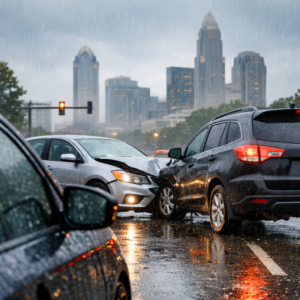
Charlotte’s spring rains often begin suddenly, leaving drivers unprepared for slick streets, pooling water, and decreased traction. Asphalt covered in oil or dirt becomes dangerously slippery, especially at intersections, bridges, and curves. Standing water can cause vehicles to hydroplane, where tires lose contact with the road, dramatically reducing control. Even experienced drivers may struggle to stop or maneuver safely under these conditions. Visibility can also be reduced by heavy rainfall, windshield wiper limitations, and reflections from streetlights or other vehicles, increasing the risk of collisions. Understanding the impact of these environmental factors is crucial for assessing fault and insurance liability after a wet-weather crash.
Common Causes of Rain-Related Accidents
Accidents during spring rain in Charlotte typically stem from a combination of environmental and human factors. Hydroplaning is a frequent cause, particularly when drivers are traveling too fast for wet conditions or when tire tread is worn. Sudden braking or following too closely also contributes, as reaction times increase when visibility is impaired. Speeding remains one of the most significant risk factors; even minor excess speed can result in loss of control on slick roads. Other factors include distracted driving, improper use of headlights, and failure to anticipate other drivers’ movements. Vehicle maintenance, such as properly inflated tires and functional brakes, can play a role in preventing accidents or reducing the severity of a collision.
Attorney Paralegal
Marcel McCrea

Tylisa Crawford
North Carolina Negligence Laws and Fault Determination
North Carolina uses a contributory negligence standard, meaning that if a driver is found even partially at fault, they may be barred from recovering compensation. Investigators and attorneys must examine every detail to determine who acted reasonably under the circumstances. This includes evaluating adherence to posted speed limits, traffic signals, and safe driving practices for wet conditions. Road maintenance and visibility, tire conditions, and vehicle performance are also considered. In cases where multiple parties are involved, the sequence of events and each driver’s decisions are carefully analyzed to assign responsibility accurately. ClearView Legal can help ensure that every factor is considered when assessing fault to protect a client’s rights and maximize recovery potential.
Investigating a Wet-Weather Collision
Thorough investigation is essential for determining liability in rainy-day accidents. Evidence collection often begins immediately at the scene and includes police reports, photographs of skid marks, vehicle damage, and road conditions. Witness statements and passenger accounts are recorded, and video from dashcams or traffic cameras may be retrieved. Weather data, such as rainfall intensity and road surface conditions at the time of the crash, also contributes to establishing fault. Detailed documentation allows attorneys to reconstruct the accident, demonstrating which driver’s actions were negligent or unsafe given the conditions. This process often involves expert analysis to ensure all variables, including hydroplaning or braking distance, are considered.
Liability in Multi-Vehicle Wet-Weather Crashes
When rain contributes to collisions involving multiple vehicles, determining liability can be complex. Investigators analyze the point of impact, vehicle speeds, braking patterns, and lane positioning to establish the sequence of events. Traffic signals, signage, and the behavior of each driver are critical. In some cases, one driver may trigger a chain reaction, but multiple drivers may share responsibility. Expert reconstruction specialists often assist in identifying which actions were avoidable and which resulted from unavoidable weather conditions. Assigning fault accurately ensures that the legal process considers each driver’s responsibility and protects the rights of injured parties.
I have worked and referred cases to Attorney Marcel McCrea in Charlotte, North Carolina, for a number of years. His zealous advocacy, keen attention to details, and client care are particularly noteworthy. He has been especially helpful in some complicated personal injury matters that I have referred to his firm. I highly recommend Marcel McCrea and ClearView Legal for anyone looking for excellent attorneys.” - Frantz Jacques ClearView Legal do great work. When I had my car accident they were very diligent in showing me the process. They took care of all the necessary paperwork and negotiation in my personal injury claim. They were both passionate and determined to get me my settlement. I am eternally grateful. Definitely 5 star lawyers in my book." - Osmund Marcellin I was recently injured in a car accident. I hired Attorney Marcel McCrea of ClearView Legal in Charlotte, NC to help me with my personal injury matter and to recover for my medical bills, lost wages, and pain and suffering. - S. Jackson
Before hiring the firm, I tried to negotiate with the insurance company on my own and got no where. Marcel McCrea did an excellent job and helped me to recover much more than I expected. Marcel and his staff exceeded my expectations and provided great customer service. I highly recommend the firm!"
The Role of Insurance Companies
Insurance companies play a significant role in wet-weather accident claims. Adjusters evaluate evidence, driver statements, and police reports to determine fault and calculate settlements. Drivers should exercise caution when speaking with insurance representatives, providing factual information but avoiding admissions of fault. Insurance companies may attempt to minimize liability or deny claims if evidence is incomplete. Legal representation helps navigate this process, ensuring claims are handled appropriately and that victims receive fair compensation for medical expenses, lost wages, and property damage. ClearView Legal assists clients in communicating effectively with insurers, negotiating settlements, and pursuing litigation if necessary.
How ClearView Legal Assists Clients
ClearView Legal offers expertise in handling rainy-day accidents, guiding drivers through every step of the claims process. Attorneys review accident reports, assess contributory negligence implications, and communicate with insurance companies to secure fair settlements. They advise clients on evidence collection, witness statements, and documentation needed to support a claim. When settlement negotiations are insufficient, attorneys provide strong representation in court. ClearView Legal’s experience in Charlotte and knowledge of North Carolina traffic and negligence laws allow them to advocate effectively, helping clients recover compensation for medical bills, vehicle repairs, and other accident-related costs.
Preventive Measures for Rainy-Day Driving
While accidents cannot be completely avoided, drivers can reduce risk by adopting safe practices. Slowing down, maintaining a safe following distance, and using headlights appropriately improve control and visibility. Avoiding abrupt lane changes, harsh braking, and distractions is essential. Ensuring tires are in good condition and properly inflated, checking wiper functionality, and staying alert to roadway hazards can prevent accidents. Being proactive and cautious helps minimize the chances of being involved in a wet-weather collision and strengthens a driver’s position if a crash occurs.
Example Scenario
On a rainy morning in Charlotte, a driver traveling too fast hydroplaned at a busy intersection, striking another car stopped at a red light. Police reports documented wet roads, skid marks, and low visibility. Investigation revealed that the hydroplaning driver’s excessive speed caused the collision, while the other driver’s minimal lane drift was not considered contributory negligence. Legal assistance helped the impacted driver recover costs for vehicle repair and medical treatment. This scenario demonstrates how speed, road conditions, and driver behavior are key factors in fault determination.
Accidents on wet Charlotte roads during spring rains are frequent and can result in serious injury and property damage. Determining fault requires careful consideration of weather, driver behavior, vehicle conditions, and local traffic laws. ClearView Legal assists drivers in understanding their rights, gathering evidence, and pursuing compensation. Skilled legal guidance is critical in cases where contributory negligence is a factor, or when multiple parties are involved. Drivers who experience rainy-day accidents benefit from professional advice to ensure fair outcomes and protect their legal interests.
Speak With a Trusted Charlotte Personal Injury Attorney Today
If you have been involved in a wet-weather accident, do not wait to seek legal guidance. ClearView Legal has the experience and resources to help clients across Charlotte recover fair compensation for injuries and property damage. Contact us today to schedule a confidential consultation and protect your rights.
This information is for general informational purposes only and is not legal advice. Consult an attorney regarding your specific situation.
To learn more about this subject click here: Documenting Evidence in a North Carolina Car Accident Case: What You Should Know

 |
 |