
Accident reports can be overwhelming, especially when they’re filled with technical jargon and unfamiliar terms. In North Carolina, understanding the crash report can be crucial for insurance claims, legal purposes, and understanding the details of the accident. In this guide, we’ll help you break down the sections of a North Carolina crash report so you can interpret it correctly and avoid confusion. ClearView Legal is here to walk you through each part of the report, so you can focus on moving forward after your accident.




If you’ve recently been involved in a car accident in North Carolina, you may be facing the daunting task of understanding a crash report. These reports, designed to document every detail of an accident, can often feel like a maze of technical language, abbreviations, and complex diagrams. Whether you’re dealing with insurance claims, trying to understand fault, or even considering legal action, knowing how to read your crash report is vital.
At ClearView Legal, we understand how overwhelming this process can be, and we’re here to help. With our guide, you’ll gain the confidence to navigate your North Carolina crash report with ease. This guide will explain the key sections of the report, what to look for, and how to interpret the information accurately.
What is a North Carolina Crash Report? 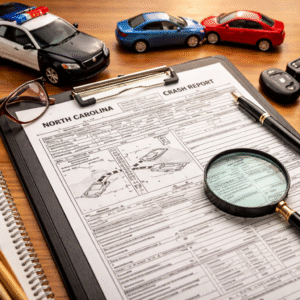
Before diving into the details, it’s important to understand what a crash report is and why it matters. A crash report in North Carolina is a formal document used by law enforcement to record the circumstances of a traffic accident. This report is generated by law enforcement officers who respond to the scene of the accident and is used for insurance purposes, legal proceedings, and statistical analysis.
The report includes everything from basic information about the parties involved to diagrams illustrating how the accident occurred. It’s not uncommon for accident victims to feel lost when reviewing these reports, especially if you’re unfamiliar with the structure or terminology. But with a little guidance, you’ll soon be able to make sense of it all.
Attorney Paralegal
Marcel McCrea

Tylisa Crawford
Key Sections of a North Carolina Crash Report
Each section of the crash report serves a specific purpose. Knowing what each part of the report contains and how to read it will help you understand the details and implications of your accident.
- General Information Section
The first part of the report includes some of the most basic yet important details. This section will provide the following information:
- Incident Date and Time: This section records when the accident occurred. It helps establish a timeline, which can be essential for insurance claims and legal processes.
- Location Details: The exact location of the accident is outlined here, including intersections, addresses, and the general area where the accident took place. This can help determine the jurisdiction of the case and how local laws may apply.
- Weather and Road Conditions: Understanding the weather and road conditions at the time of the accident can offer insight into what might have contributed to the collision. Was it raining, icy, or foggy? Were the roads slick or under construction? These factors can influence fault and negligence assessments.
- Driver and Vehicle Information
This section is essential for understanding who was involved in the accident and what vehicles were involved. The report will list:
- Driver Identification: Each driver’s name, license number, and sometimes their contact information are recorded here. If there are multiple drivers involved, each one will be listed separately.
- Vehicle Details: This includes the make, model, and year of each vehicle, along with the license plate numbers. Additionally, this section may indicate whether any of the vehicles were legally insured and whether they had any noticeable mechanical issues that could have contributed to the accident.
- Insurance Information: The crash report will also include details about the insurance coverage for each vehicle involved, which is crucial when filing claims.
Choosing a Personal Injury Attorney Personal Injury Case Case TimelineRelated Videos
- Crash Type and Impact Severity
In this section, the report classifies the type of accident and its severity. North Carolina law enforcement uses specific codes and terminology to categorize the accident. You’ll typically see classifications like:
- Rear-End Collision
- Side-Swipe Accident
- Head-On Collision
- T-bone Accident
This section also outlines the severity of the impact and provides a description of any property damage or injuries. If you were involved in the accident, this can help clarify whether you were at fault or not.
- Accident Diagram
One of the more visually complex parts of the report is the Accident Diagram. This is where law enforcement officers illustrate how the crash occurred. The diagram shows the relative positions of the vehicles before and after the accident, the direction of travel, and the collision points.
Understanding this section is important because it can help confirm your recollection of the event. If there were any witnesses, their statements may also be reflected here, further clarifying the cause of the crash.
- Injury and Damage Report
The next section will focus on the damages and injuries sustained in the accident. Here, you’ll see:
- Injuries: This part of the report categorizes the type and extent of injuries to drivers and passengers. Injuries might be listed as minor, moderate, or serious. If you or someone else was injured in the accident, this section will be especially important for both insurance and legal purposes.
- Vehicle Damage: Each vehicle involved will have an assessment of the damages. For insurance purposes, this can help determine how much compensation may be owed for vehicle repairs or replacements.
- Officer’s Narrative and Determination
Perhaps one of the most critical sections of the report is the Officer’s Narrative. This is where the responding officer provides a detailed summary of their investigation and assessment of the crash.
The officer may include:
- Witness Statements: If there were any witnesses to the accident, their testimony will be included here.
- Officer’s Observations: The officer may note anything from the driver’s behavior to the road conditions or any other contributing factors they noticed at the scene.
- Fault Determination: This is where the officer may assign fault based on the evidence gathered. While law enforcement’s determination is important, it is not legally binding. The final decision regarding fault is usually made by an insurance company or court.
- Tickets and Legal Violations
This section details whether any of the drivers involved were cited for traffic violations. These citations could range from speeding or running a red light to driving under the influence of alcohol or drugs.
If you were issued a citation, it could influence your insurance claims, and it might also play a role in any legal action following the accident.
Understanding the Crash Report’s Impact on Insurance and Legal Matters
Now that you know how to read a North Carolina crash report, it’s important to understand its role in insurance and legal cases. The information in the report will be used by your insurance company to determine liability and compensation. If you decide to pursue legal action, the crash report will be a key piece of evidence in building your case.
At ClearView Legal, we specialize in helping clients navigate the complexities of car accident claims and lawsuits. If you’ve been involved in an accident and are unsure how to proceed, our experienced attorneys are here to help. We can interpret your crash report, represent you in court, and ensure you receive the compensation you deserve.
Reading and understanding a crash report can seem overwhelming at first, but with a little knowledge, it becomes much easier to navigate. Whether you’re dealing with insurance claims or considering legal action, understanding the key sections of the North Carolina crash report will help you take the next steps with confidence.
If you need assistance interpreting your crash report or pursuing a claim, ClearView Legal is here for you. Contact us today for a free consultation, and let us help you move forward after your accident.
To learn more about this subject click here: North Carolina Car Accident Settlement Process: A Step-by-Step Guide

 |
 |