




What Exactly is Black Ice? 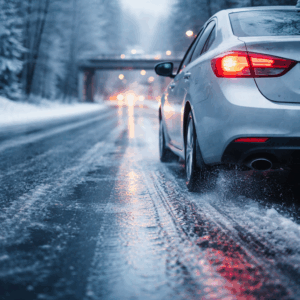
Black ice, also known as invisible ice or slippery ice, is a thin layer of ice that forms on the road surface. The term “black” refers to its color and the way it blends with the color of the asphalt. This makes it nearly impossible to spot, especially at night or during low-light conditions. Unlike snow or hail, which are more visible and give drivers obvious warning signs, black ice is often transparent, allowing the underlying road surface to show through. In most cases, it appears as a wet patch on the road but is actually frozen water that creates an extremely slick surface.
The Conditions That Lead to Black Ice in Charlotte
Charlotte’s weather, while not as extreme as some northern regions, still sees its fair share of freezing temperatures, especially during the winter months. Black ice forms when certain conditions align, creating the perfect storm for its formation on local roads. Understanding these conditions is essential for staying safe during winter driving. The most common contributors to black ice formation include:- Freezing temperatures: Black ice generally forms when the temperature dips below 32°F (0°C). Even when the air temperature rises slightly during the day, roads can still remain frozen overnight, especially early in the morning or late at night.
- Rain or drizzle: Even light rain or drizzle can create conditions favorable for black ice formation, especially if the temperature falls just below freezing. The moisture from the rain forms a thin layer of ice that’s often hard to detect by the naked eye.
- Shaded areas: In the colder months, areas that are shaded by trees, buildings, or overpasses may freeze more quickly, remaining icy long after the sun has risen.
- Bridges and overpasses: These structures are particularly prone to freezing more quickly than regular roadways due to the cold air circulating beneath them, making them more likely to be covered in black ice even if the surrounding roads are clear.

Marcel McCrea
Attorney

James A. Noel
Attorney

Tylisa Crawford
Paralegal
Why Is Black Ice So Hard to Detect?
One of the main dangers of black ice is that it often blends seamlessly with the road surface, making it nearly invisible to drivers. This lack of visual warning makes it more difficult for drivers to take appropriate caution. There are several reasons why drivers miss the warning signs of black ice:- Lack of color contrast: Unlike snow or slush, black ice doesn’t create a noticeable visual difference on the road. The ice can be clear, reflecting the road’s color, which often looks just like wet asphalt. This subtle difference is hard for drivers to see unless they are specifically looking for it.
- Wet-looking surface: In many cases, black ice appears as a small patch of wet pavement. Drivers may believe the road is simply wet, thinking nothing of it, only to realize too late that it’s a hazardous patch of ice.
- Temperature variability: Black ice can form even when the air temperature is a few degrees above freezing, and it often does so in places where drivers wouldn’t expect it, such as in the shade or on overpasses. As a result, drivers may not adjust their driving behavior even when conditions are ripe for black ice to form.
- Road moisture: Black ice can form in areas where moisture from rain, fog, or dew settles on the road and freezes overnight. This is especially true in the early morning hours before the sun has a chance to warm the road. If drivers don’t notice this early in the day, they may end up on roads covered with invisible ice.

I have worked and referred cases to Attorney Marcel McCrea in Charlotte, North Carolina, for a number of years. His zealous advocacy, keen attention to details, and client care are particularly noteworthy. He has been especially helpful in some complicated personal injury matters that I have referred to his firm. I highly recommend Marcel McCrea and ClearView Legal for anyone looking for excellent attorneys.”
- Frantz Jacques
ClearView Legal do great work. When I had my car accident they were very diligent in showing me the process. They took care of all the necessary paperwork and negotiation in my personal injury claim. They were both passionate and determined to get me my settlement. I am eternally grateful. Definitely 5 star lawyers in my book."
- Osmund Marcellin
I was recently injured in a car accident. I hired Attorney Marcel McCrea of ClearView Legal in Charlotte, NC to help me with my personal injury matter and to recover for my medical bills, lost wages, and pain and suffering.
Before hiring the firm, I tried to negotiate with the insurance company on my own and got no where. Marcel McCrea did an excellent job and helped me to recover much more than I expected. Marcel and his staff exceeded my expectations and provided great customer service. I highly recommend the firm!"
- S. Jackson
Common Locations for Black Ice in Charlotte
While black ice can form anywhere, there are certain areas in Charlotte that are more likely to be impacted due to their geographic or structural characteristics. Some of the most common locations to watch out for include:- Bridges and overpasses: These structures are among the first to freeze because cold air circulates both above and below the surface, unlike regular roads, which are insulated by the ground.
- Shaded roadways: Roads that remain in the shade throughout the day, such as those under bridges or surrounded by trees, are more prone to freezing. Even if temperatures rise above freezing, shaded spots may remain icy, posing a significant risk to drivers.
- Exit ramps and on-ramps: These areas are more likely to experience icy conditions as they are often exposed to cooler temperatures for longer periods of time. Drivers exiting or entering highways should always be cautious, especially during the early morning or late evening when black ice is most likely to form.
- Low-lying areas and valleys: In areas where cold air tends to settle, such as low-lying sections of road, black ice can form more quickly. These areas may appear safe but can hide black ice, making them more dangerous.
How to Drive Safely on Roads Potentially Covered with Black Ice
When driving on roads that may have black ice, it’s essential to take extra precautions. Here are some driving tips to help you avoid accidents:- Reduce your speed: The faster you drive, the harder it is to react to unexpected conditions. Lower your speed in potentially icy areas, even if you can’t see the ice. Slower speeds give you more time to respond if you encounter black ice.
- Keep a safe distance from other vehicles: Increasing the space between your vehicle and others gives you more room to stop or maneuver in case of a skid. Maintain at least three to four car lengths between you and the vehicle ahead.
- Use your headlights: Even during the day, using your headlights can improve your ability to spot potential ice patches. In low-light conditions, headlights will help illuminate any areas that may appear wet and icy.
- Avoid sudden movements: If you do encounter a patch of black ice, avoid slamming on the brakes or steering suddenly. This could cause your car to spin out of control. Instead, gently lift your foot off the accelerator and steer smoothly in the direction you want to go.
- Stay calm if you start to skid: If your vehicle starts to slide, don’t panic. Keep your hands on the wheel and gently steer in the direction you want the front of the vehicle to go. Avoid overcorrecting or making sharp turns, which could make the skid worse.
What to Do If You Are Involved in an Accident Due to Black Ice
If you are involved in an accident caused by black ice in Charlotte, it’s essential to take the right steps immediately. Here’s what you should do:- Check for injuries: First, check yourself and your passengers for injuries. If anyone is hurt, call 911 immediately and wait for emergency responders to arrive.
- Move to safety: If your vehicle is still operational and it’s safe to do so, move your car to the side of the road. Turn on your hazard lights to warn other drivers of the situation.
- Document the scene: If possible, take photos of the accident scene, the road conditions, and any visible damage to your vehicle. This documentation can be essential when filing an insurance claim or pursuing a legal case.
- Contact the police: In many cases, a police report will be required for insurance purposes. Make sure to file a report with the responding officers.
- Contact ClearView Legal: If the accident leads to significant damage or injury, it’s essential to contact a trusted legal professional who can help. ClearView Legal in Charlotte can assist with your car accident claim and ensure that your rights are protected during the legal process.