
Dog bites in Charlotte apartment complexes are more common than many residents realize, and liability can extend beyond the dog’s owner. ClearView Legal frequently handles cases where property owners, apartment managers, and even other tenants may share responsibility depending on the circumstances. Understanding North Carolina law, documenting incidents, and knowing your legal options are critical steps for securing proper compensation.



Understanding Dog Bite Liability in North Carolina 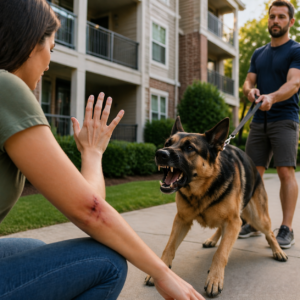
North Carolina law imposes strict liability on dog owners for bites that occur without provocation. This means that if a dog attacks someone in a public or private setting and the victim has not provoked the animal, the dog’s owner is responsible for medical costs, lost wages, and any other damages resulting from the injury. In apartment settings, liability can be more complex, as multiple parties may have a duty to prevent harm.
Apartment Owners and Managers
Property owners and management companies have a legal duty to maintain safe premises for all residents and visitors. This duty encompasses enforcing pet policies, responding to prior complaints about aggressive animals, and maintaining common areas like courtyards, lobbies, and pathways in a way that minimizes risk. If an apartment complex had prior knowledge of a dog’s aggressive behavior and failed to act, the management company or property owner may be held liable. Examples of negligence include ignoring complaints about a dog that has previously bitten someone, failing to enforce leash laws, or not installing proper signage warning of potential dangers.
Negligence by Fellow Tenants
Liability may also extend to other tenants if their actions contributed to a dog attack. This could occur if a neighbor allowed a dog to roam freely in shared spaces, ignored containment rules in the lease, or engaged in behavior that provoked the animal. While the primary responsibility usually rests with the dog owner, contributory negligence by other tenants may affect the case outcome and potential recovery.
Attorney Paralegal
Marcel McCrea

Tylisa Crawford
The Importance of Prompt Action
If you are bitten by a dog in a Charlotte apartment complex, immediate action is crucial. Seek medical attention without delay to treat injuries and create a documented medical record. Report the incident to the apartment management and local animal control authorities. Document the scene with photographs of your injuries, the dog, and surrounding conditions. Collect contact information for witnesses and maintain detailed records of medical expenses, lost income, and any other related costs. These steps ensure that evidence is preserved and strengthen your ability to pursue compensation from multiple responsible parties.
Insurance Considerations
Apartment complexes often carry liability insurance that may cover injuries caused by pets on the property. Additionally, renters or homeowners insurance policies may provide coverage for dog bite injuries. Understanding which insurance policies may apply is crucial in maximizing recovery. Insurance companies may attempt to minimize payouts, so having proper legal representation ensures your rights are protected and fair compensation is sought.
Legal Recourse and Statutes of Limitations
North Carolina law establishes deadlines for filing personal injury claims. Typically, an individual has three years from the date of the dog bite to file a lawsuit. Acting promptly ensures that your claim is filed within the legal timeframe and that evidence is preserved. ClearView Legal can help navigate these deadlines, investigate the incident thoroughly, and pursue claims against all liable parties.
I have worked and referred cases to Attorney Marcel McCrea in Charlotte, North Carolina, for a number of years. His zealous advocacy, keen attention to details, and client care are particularly noteworthy. He has been especially helpful in some complicated personal injury matters that I have referred to his firm. I highly recommend Marcel McCrea and ClearView Legal for anyone looking for excellent attorneys.” - Frantz Jacques ClearView Legal do great work. When I had my car accident they were very diligent in showing me the process. They took care of all the necessary paperwork and negotiation in my personal injury claim. They were both passionate and determined to get me my settlement. I am eternally grateful. Definitely 5 star lawyers in my book." - Osmund Marcellin I was recently injured in a car accident. I hired Attorney Marcel McCrea of ClearView Legal in Charlotte, NC to help me with my personal injury matter and to recover for my medical bills, lost wages, and pain and suffering. - S. Jackson
Before hiring the firm, I tried to negotiate with the insurance company on my own and got no where. Marcel McCrea did an excellent job and helped me to recover much more than I expected. Marcel and his staff exceeded my expectations and provided great customer service. I highly recommend the firm!"
How ClearView Legal Can Assist
ClearView Legal provides expert guidance in dog bite cases. Attorneys can investigate the incident, gather witness statements, and secure evidence from the apartment complex. They assess potential liability for dog owners, property managers, and other tenants. Skilled negotiation with insurance companies and representation in court ensure that victims can recover the full measure of damages to cover medical bills, lost wages, and pain and suffering.
Real-Life Liability Scenarios
- A tenant’s dog bites a visitor in the courtyard, and the apartment management was previously warned about the animal’s aggressive behavior but took no action. Both the tenant and the management company could be liable.
- A dog escapes from an unsecured patio and bites a neighbor. Liability could extend to the dog owner and potentially to the tenant responsible for securing the outdoor space.
- A complex fails to post leash or containment policies, and a resident ignores the rules, leading to an attack. In this scenario, management could share responsibility due to the failure to enforce safety policies.
Preventing Dog Bites in Apartment Communities
Prevention is key. Clear rules regarding pet ownership, leash requirements, and containment should be enforced consistently. Tenants must comply with lease requirements, secure pets at all times, and avoid interactions that may provoke animals. Education programs for residents on safe interactions with dogs can significantly reduce the risk of bites in communal areas.
Documenting Injuries and Evidence
Accurate documentation is essential. This includes photographs of injuries, medical reports, incident reports filed with management or authorities, and any prior complaints regarding aggressive animals. Collecting contact information from witnesses, recording dates and times, and preserving correspondence related to the incident strengthens claims and demonstrates due diligence in pursuing legal remedies.
Understanding Contributory and Comparative Negligence
North Carolina follows a contributory negligence framework, meaning that if the injured party contributed to the incident in any way, recovery may be limited. In apartment dog bite cases, this could involve a victim provocation or failure to follow posted warnings. An experienced attorney can evaluate whether contributory negligence applies and how it impacts the potential recovery against multiple parties.
Calculating Damages
Damages from dog bite injuries can include medical bills, future healthcare needs, lost wages, emotional distress, and pain and suffering. In apartment settings where multiple parties are potentially liable, damages may be apportioned based on each party’s contribution to the incident. Accurate calculation ensures victims are fully compensated for all losses.
Communication with Insurance Companies
Insurance companies often attempt to settle claims quickly for less than fair compensation. ClearView Legal assists clients by handling all communication with insurers, evaluating settlement offers, and negotiating to ensure victims receive compensation commensurate with the severity of injuries and the full scope of damages.
Dog bites in Charlotte apartment complexes involve complex liability issues that extend beyond the dog owner. Property managers, apartment owners, and other tenants may be responsible depending on their actions or inaction. Prompt medical attention, thorough documentation, and legal guidance from experienced attorneys like ClearView Legal are critical for protecting rights and securing appropriate compensation for injuries and losses.
If you have been injured by a dog in a Charlotte apartment complex, contact ClearView Legal today to schedule a free consultation and discuss your rights and potential claims.
Disclaimer
This content is for informational purposes only and is not legal advice. Consult an attorney regarding your specific circumstances.
To learn more about this subject click here: Common Injuries Caused by Dog Bites in Iredell County, North Carolina

 |
 |